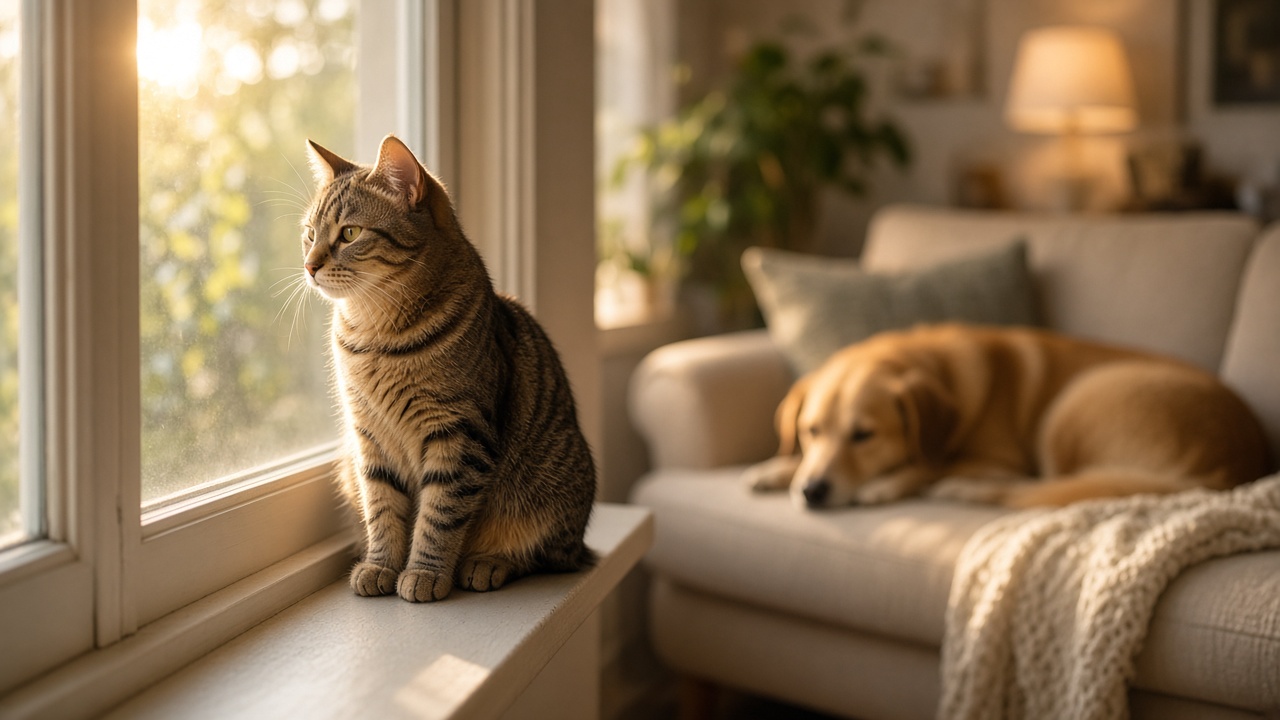
Sitting and boarding solve the same problem, someone is away, in two different places. One keeps the pet at home. The other moves the pet into a caregiver's house for a home-style stay. Neither is automatically better. The useful question is which environment your dog or cat can handle for the length of this trip.
Staying at home
Pet sitting is a drop-in visit in your house. The furniture, litter box, crate, and smells stay put. For many cats, that is the entire argument. For some dogs, the familiar yard and sofa matter more than having a person in the building all night.
The tradeoff is obvious: between visits, the pet is in an empty home. That can be fine for a confident animal with a solid alone-time history. It is a poor fit for a dog who panics at departures or a pet who cannot wait for the next scheduled drop-in.
Details and starting prices: Pet Sitting.
Staying with a caregiver
Home-style boarding puts a suitable pet in a Ring Pet Central caregiver's house. Someone is in the household rhythm: meals, evening, overnight. The pet gives up home-field advantage. New floors, new sounds, and possibly other animals are part of the deal, which is why boarding is subject to availability and suitability.
Details and starting prices: Pet Boarding.
Routine
Sitting can copy your feeding times and litter setup almost exactly. Boarding can copy the written schedule, but the rooms are different. If your pet eats only in a specific kitchen corner, sitting preserves that. If your pet cares more about not being alone from dinner until breakfast, boarding may preserve the part that actually matters.
Environment
Home is known. A caregiver home is a house, not a kennel row, and still a change. Think about carriers, car rides, stairs, and other pets already living there. A shy cat who hides under your bed may not rest in a guest room. A social dog who is used to a busy living room might settle faster with a person around than in a silent apartment.
Owner schedule
A work conference with three long days and nights in a hotel is a different request than a six-hour dinner. Sitting can cover a weekday with one or two visits. Overnight trips raise the question of who is present at 11 p.m. If you need that overnight presence, boarding is the service built for it. If you need the house looked after and the pet prefers home, sitting is the service built for that.
Pet personality
Confident, house-trained dogs who already spend workdays alone often do well with sitting. Dogs who pine, bark at every hallway noise, or have never been left overnight may be more comfortable with a host. Cats usually vote for home. Some cats who already travel to a trusted house can board without much fuss. Personality is data. It is not a personality-test score. You know the animal.
Duration of absence
A single daytime gap is usually a sitting or walking question. A weekend starts to involve nights. A week of empty house and two short visits a day is a lot of solitude for some pets and perfectly normal for others. Longer trips also mean more packed food, more medication handoffs, and a clearer emergency plan. Use the boarding checklist even if you eventually choose sitting. The same information helps either caregiver.
Advantages and considerations
Pet sitting
Advantages: familiar rooms, less travel stress, mail and plants can be noted if you ask, cats keep their territory. Considerations: the pet still spends hours alone, keys and access have to be arranged, and a 30-minute visit cannot recreate an entire evening at home.
Home-style boarding
Advantages: overnight company, meals on a household clock, less empty-house time. Considerations: the pet must handle a new house, compatibility has to be reviewed, not every request is accepted, and you will need a thorough notes packet.
If you are unsure, send a request with both the dates and an honest paragraph about how your pet handles being alone versus being a guest. We review walking, sitting, and boarding separately and confirm only the service that looks like a fit.